Key innovations in turbocharger design
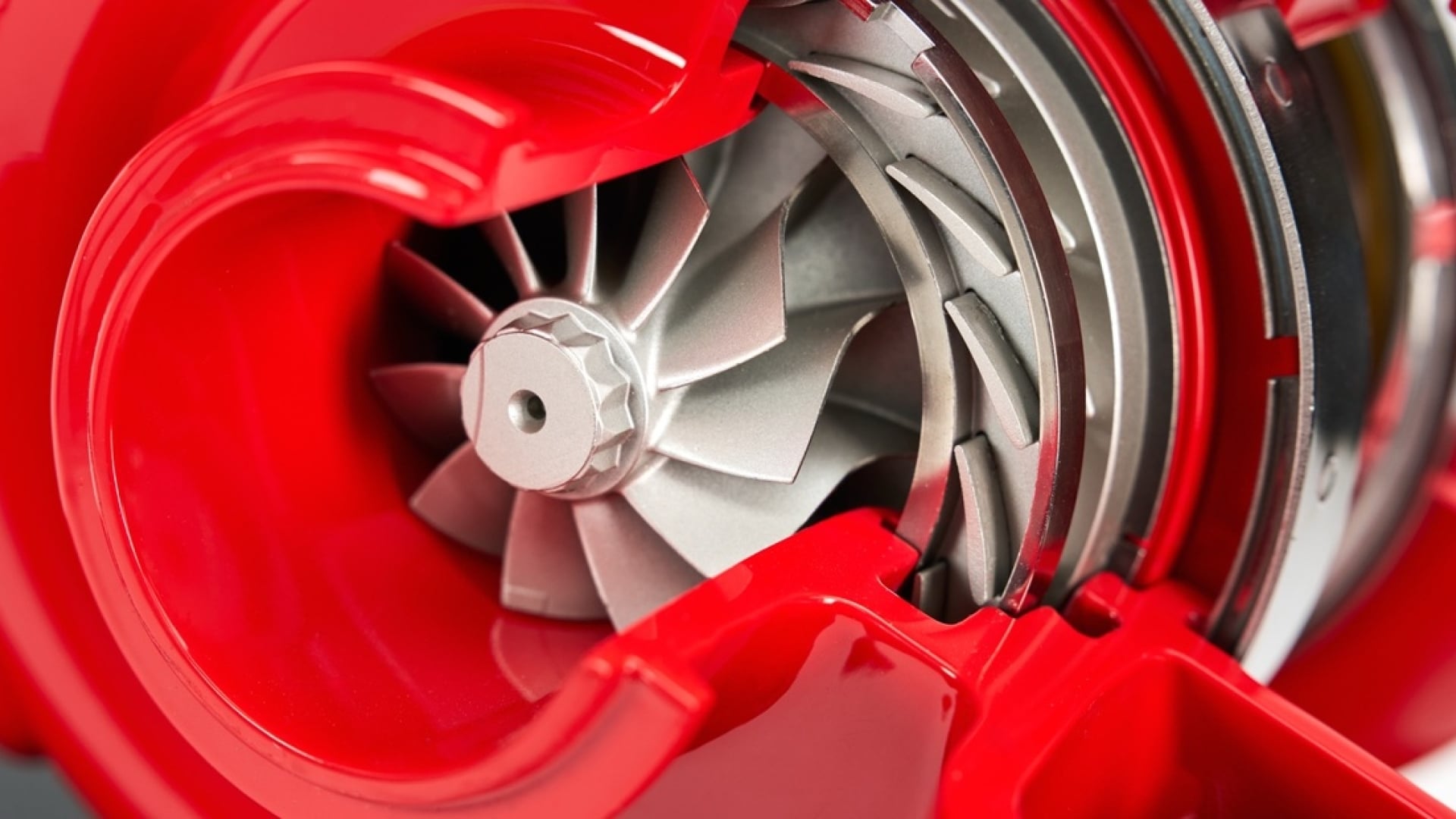
Engines depend on turbochargers to deliver power, efficiency and emissions performance. Turbochargers are a core component of the internal combustion engines used in commercial vehicles and are critical to generating power efficiently. At Cummins Inc., Cummins® Holset® turbochargers are tailored to match specific customer and application requirements to help deliver the right balance of performance, efficiency and durability.
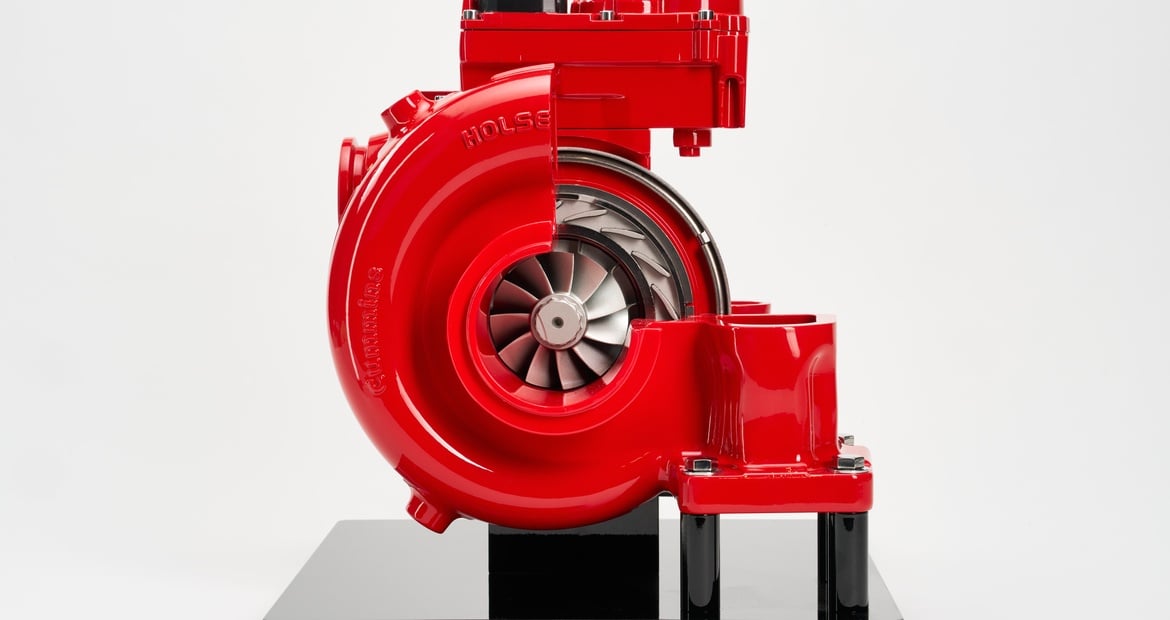
The components that shape turbocharger design
When designing a turbocharger, engineers select custom-designed components to meet engine performance, emissions and durability targets:
- Compressor stage: Compressor wheel and housing designs, along with component clearances, determine the balance between air mass flow, pressure ratio (boost) and efficiency for each engine’s requirements. Vaned compressors and abradable technologies are examples of innovations used to maximize compressor performance.
- Bearing system: Designs that minimize frictional losses improve overall turbocharger efficiency and reduce spool-up time. Roller element bearings (ball bearings) are increasingly popular because they provide strong performance and durability.
- Turbine stage: Turbine wheel, nozzle and housing designs must balance exhaust mass flow, expansion ratio and efficiency to generate enough power for the compressor while maintaining proper engine back pressure. For example, variable geometry turbines commonly used in North American medium-duty and heavy-duty truck markets can adjust boost pressure across varying engine speeds and loads while providing the back pressure needed for exhaust gas recirculation. This helps improve fuel efficiency across a broader range of operating conditions.
Designing turbochargers for maximum performance
Individual turbocharger components affect overall performance, but proper system matching, or the selection of components for the complete system, is what ensures performance aligns with specific engine requirements. Matching typically occurs during the compressor and turbine stages.
- Compressor stage: Engineers identify a compressor that meets the engine’s airflow requirements based on engine displacement, power targets and air-fuel ratio requirements established by the engine manufacturer. Air-fuel ratio is especially important for meeting emissions standards. By maximizing efficiency at critical operating conditions, more turbine energy goes toward creating boost pressure instead of generating excess heat. For example, when an engine requires more power while maintaining the same displacement and air-fuel ratio, it typically requires a larger compressor.
- Turbine stage: Engineers select a turbine that generates enough power for the compressor to meet air mass flow and boost requirements across engine operating conditions. The turbine generates power using exhaust flow and pressure expansion across the turbine. A more efficient turbine requires less pressure difference to generate the same power, which helps reduce engine back pressure. In practice, when an engine requires more power at the same displacement and air-fuel ratio, it typically requires a smaller turbine to maintain the right balance.
Improving efficiency in turbochargers
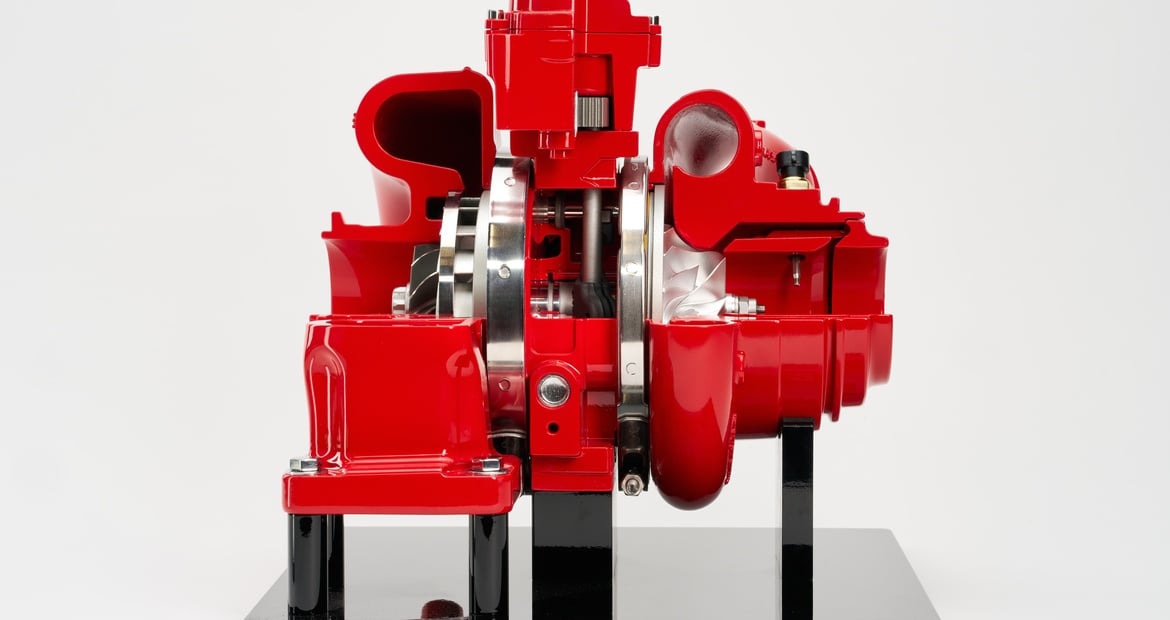
Recent advancements in turbocharger technology have enabled significant efficiency improvements. Beyond tailoring aerodynamic designs for critical engine operating points, key developments include:
- Compressor stage: Abradable coatings have been introduced in the latest generation of Holset turbocharger products to improve compressor efficiency by precisely controlling the clearance between the compressor wheel and housing. Vaned compressors are also used to boost compressor efficiency while increasing pressure capability and maintaining the flow range of a non-vaned compressor.
- Bearing system: Newer mid-range and heavy-duty turbocharger platforms accommodate ball bearings, which reduce frictional losses in the bearing system. This improves overall turbocharger efficiency and transient response for stronger low-end performance.
- Turbine stage: Variable geometry turbine technology has advanced, with Holset turbochargers achieving significant turbine improvements by precisely controlling key clearances within the nozzle. Wastegate turbocharger products have also improved turbine efficiency through full back shroud turbine wheels and optimized fixed nozzle designs.
As engine performance and emissions requirements continue to evolve, turbocharger design will remain a key area of innovation. The combination of precise component matching, optimized aerodynamics and continuous engineering advancements helps turbochargers deliver efficient, reliable power for commercial vehicle applications.
Author Profiles