Power to advance commercial vehicle software
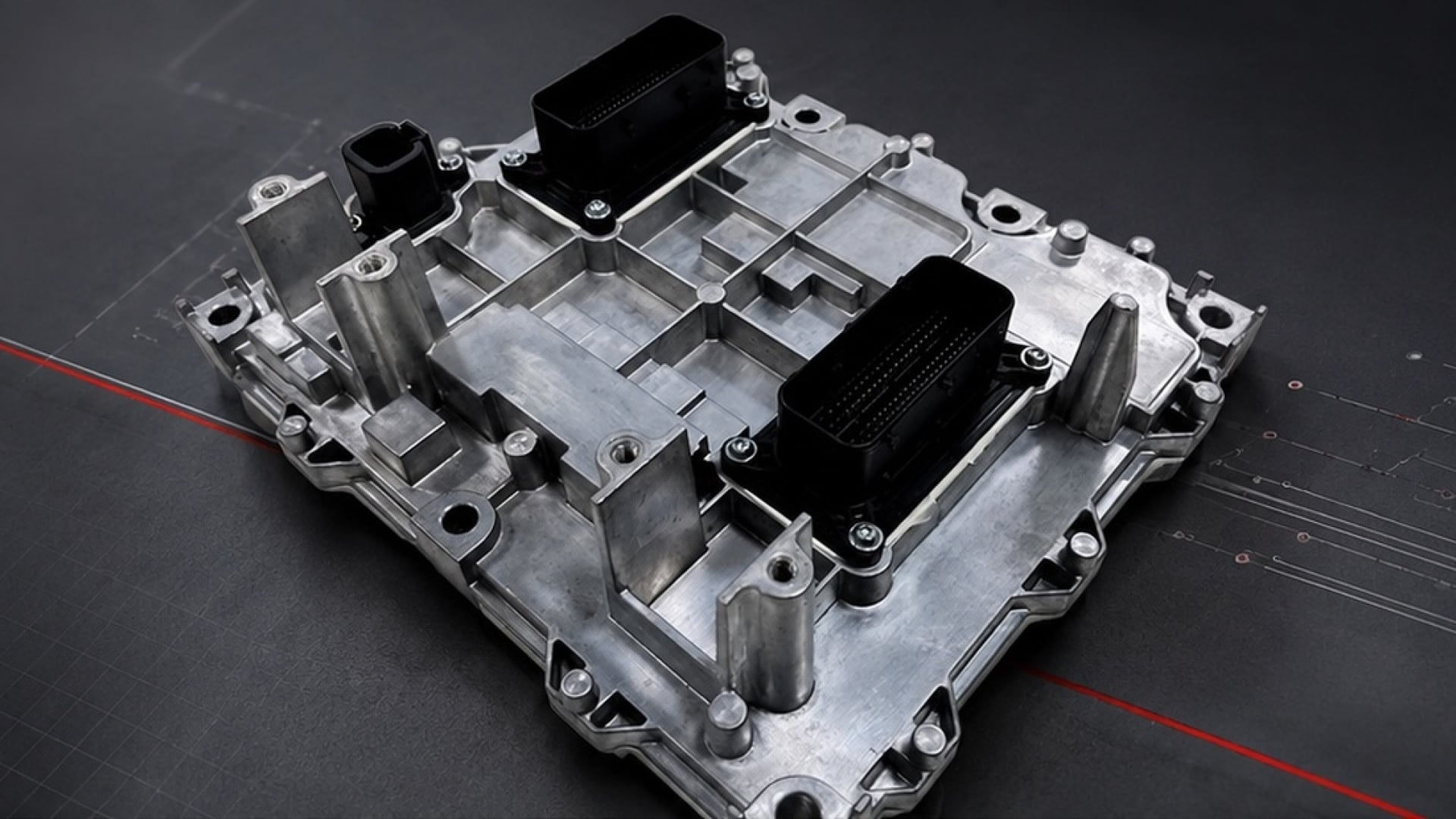
Cummins Inc. has a long history of delivering electronics and software that differentiate our products and create meaningful value for customers. What began with simple fueling and timing control software has evolved into a broad and rapidly expanding portfolio of vehicle and digital capabilities. Today, Cummins is a global leader in high-performance electronic controls and software-enabled solutions
The widespread availability of vehicle connectivity and cloud computing is accelerating demand for both onboard and offboard software at a rapid pace. Customers increasingly expect new features, performance improvements, and updates to move quickly from concept to production, delivered seamlessly through over the air software updates. Meeting these expectations requires new approaches to software development, validation, and release supporting faster, more frequent update cycles.
To enable this pace of innovation, Cummins is adopting industry leading Development and Operations (DevOps) tools and processes to support continuous integration and continuous deployment pipelines. These automated pipelines improve development efficiency, enable early and continuous validation, and drive higher quality software releases. By standardizing build, test, and deployment workflows, Cummins can deliver robust, production ready software at cycle times that align with the rapidly growing demand for software content and over the air functionality.
Ease of integration and software upgradability across electronic control modules, edge devices, digital tools and cloud infrastructure are critical. To support this evolution, Cummins is developing hardware agnostic software backed by middleware technologies that improve portability and simplify upgrades over the vehicle lifecycle. Software container technologies are further enabling consistent deployment across vehicle, edge, and cloud environments and complementing over the air programming by supporting modular updates, rapid rollback, and scalable service deployment.
As vehicles become increasingly software defined, embedded intelligence plays a critical role in control, optimization, safety, and security. In response, Cummins is advancing its electronic control capabilities across both on highway and off highway applications. Central to this evolution is the next generation of software architecture, built on Automotive Open System Architecture (AUTOSAR), a next generation platform designed to improve safety, cybersecurity, and speed system integration. This positions Cummins to meet the growing demands of connected, intelligent commercial vehicles.
AUTOSAR-based software architecture
Cummins has adopted Automotive Open System Architecture (AUTOSAR) as the foundational software platform for its next-generation software architecture. AUTOSAR provides the standardized, secure, and scalable baseline needed to decouple software from hardware for embedded software systems, enabling faster innovation, greater reuse and platform sustainability across commercial vehicle products.
While AUTOSAR is a mature and widely proven standard in the passenger vehicle industry, its adoption in commercial vehicles is more recent. Cummins is leading this transition by applying AUTOSAR across its electronic control systems, establishing a common software foundation that supports functional safety, cybersecurity, and multi supplier integration at scale.
Enabling a software defined vehicle
Standardizing the embedded software layer allows Cummins to move beyond traditional, controller centric designs toward a fully software defined architecture. Control applications are no longer confined to individual electronic control units but are distributed across vehicle level computing, advanced edge processors, and cloud based systems. This enables:
- Advanced edge computing, supporting higher performance controls, multicore processing, and consolidation of performance functions
- Cloud connectivity, enabling continuous software updates, fleet intelligence, and lifecycle optimization
- Digital service and diagnostic tools, delivering real time insights, predictive diagnostics, and faster service resolution
AUTOSAR provides the stable, interoperable foundation that allows these capabilities to more easily evolve independently of hardware refresh cycles.
Integrating across vehicle, edge, and cloud
The next generation of software architecture builds on AUTOSAR to unify embedded controls with edge and cloud computing environments. Standardized interfaces and modular design enable seamless data flow from vehicle controllers to edge processors and digital platforms. This integration supports over the air updates, advanced diagnostics, prognostics, and future AI enabled optimization while maintaining the determinism, safety, and reliability required for mission critical vehicle systems.
By establishing the next-generation software architecture, Cummins is accelerating development, simplifying supplier collaboration, and creating a scalable platform for continuous innovation.
Containerization for portable edge software
To further enable seamless integration and portability across different original equipment manufacturer(OEM) edge and telematics environments, Cummins is adopting container technology as a core enabler of its software defined platform. Containerized software packages encapsulate applications and their dependencies into standardized, lightweight units that can be deployed consistently across diverse computing environments.
By adopting container-based deployment models, Cummins simplifies integration between various edge computing platforms and cloud services across multiple OEMs, enabling software to be reused across different OEM Telematics edge processors. This approach reduces development dependencies, shortens integration cycles, and ensures consistent behavior across vehicle adjacent edge systems and cloud infrastructure.
Containerization of the connectivity software stack supports over the air programming and continuous deployment strategies by enabling modular updates, rapid rollback and independent scaling of services. Digital diagnostics, analytics, and fleet services can be deployed and updated independently of core control software, improving resilience while accelerating feature delivery. As computing continues to distribute across the vehicle and beyond, container technology provides the portability and flexibility required to evolve software capabilities while isolating validated, safety critical systems.
A platform for future growth
The next generation of software architecture enables Cummins to consistently deliver secure, service ready software while expanding into new digital capabilities. It underpins Cummins’ ability to scale software across product lines, rapidly deploy new features, and support a growing ecosystem of digital services, positioning Cummins at the forefront of intelligent, connected commercial vehicles.
Author Profiles